Insights
Green check mark burst shape
Premium

What Master Storytellers Know About Anecdotes

2026 Update: Knowing how to identify, write, and tell anecdotes can improve your speech.

7
minute read
Published on
May 25, 2026
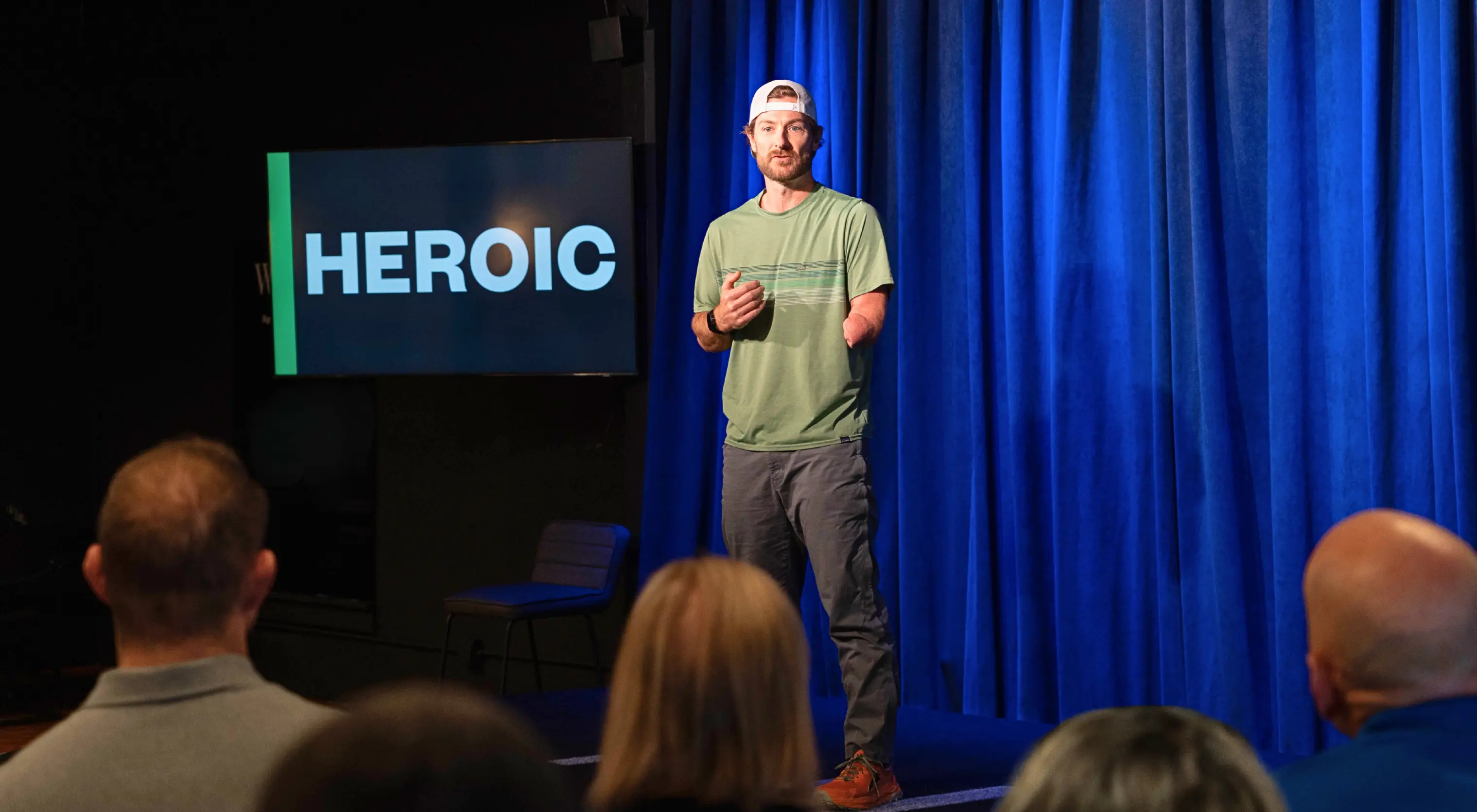
Laken James, professional athlete, speaker, and founder of Five Star Academy, shares a story about her basketball journey onstage at CORE | The Breakthrough Experience.

Speakers often struggle when crafting and telling stories. The root problem is not a lack of creativity, character development, or a performance weakness.

It’s misidentification.  

You see, some of what you think are stories aren’t stories at all—they’re anecdotes. 

Being able to recognize the difference and successfully build both stories and anecdotes can help you ensure they captivate, inspire, and entertain your specific audience. 

What Is an Anecdote? 

An anecdote is a brief, real-life moment that delivers insight or amusement. Unlike stories, anecdotes don’t require traditional conflict, a beginning, middle, and end, or resolution. Most often, they use contrast, surprise, or reflection instead of tension. 

Anecdotes can give your audience a quick example that helps them process a particular teaching point or understand a complex topic. They can add a moment of levity or amusement that infuses much-needed contrast into your speech. 

Anecdotes are not less important than stories, they simply have a different function. The great thing about anecdotes is that they can fit in many different places in your speech (you can even use two anecdotes back to back). 

Stories vs. Anecdotes: How to Spot the Difference

The defining feature of a story is conflict. This essential element raises the stakes, adds tension, and engages your audience. Without conflict, your story will most likely bore or leave your audience asking, “Why is she telling us this?” 

Strong stories usually have a three-act structure. The majority of a story is in the second act—where conflict produces action, which produces more conflict, and on and on. The conflict-action-resolution pattern makes for a story that’s exciting, compelling, and memorable.

Knowing the difference between a story and an anecdote—and knowing how to uniquely craft each one—can help you organize your speech in a more powerful way.

Full Transcript

Read Full Transcript
X Mark icon
Don't
confuse a story with an anecdote—being able to identify each can help you make it stronger, punchier, and more effective.
Check mark icon
Do
know why you’re sharing a specific story or anecdote with your audience. Ask: “What do I want my audience to discover, realize, think, or feel from this?”
Black right arrow icon

A Simple Structure for an Effective Anecdote

Mastering the three-act story format will do wonders for your storytelling skills. Likewise, implementing and practicing using a template for your anecdotes can help you create insightful, entertaining, and memorable moments. 

Here’s a simple structure you can use as you craft anecdotes for your speeches:  

The Setup

An anecdote starts off with some very brief background information—similar to Act One in a story, but you’ll want to keep it even more concise. Give your audience just enough context to understand the situation. Quickly ground your audience by telling them key details like who, where, and when. These details should set up an expectation or assumption that your audience might recognize. 

Here’s an example of an anecdote setup: “A few years ago, I was waiting in line at a coffee shop, running late, preoccupied with my phone.”

The Shift

After you set the stage, you’ll introduce an interesting detail, a small observation, or a surprising turn. This is when something unexpected or notable happens.  

Now, this is not conflict—remember, anecdotes don’t usually have real conflict (stories do)—it’s just a moment that reveals something new. 

Conflict is something that impedes the character from getting what they want or achieving their goal. If your anecdote has conflict, then it’s not an anecdote, it’s a story. (And if your story isn’t quite working—and it really is a story—then you might need to work on adding more conflict by raising the stakes.) 

Our anecdote example continues: “The barista hands me my coffee and says, ‘Hey, I hope your day gets better.’ I hadn’t realized my frustration was written all over my face.”

The Insight 

To wrap up your anecdote, reflect on why this moment mattered or how it changed your perspective. Invite the audience to connect it to their own experiences as well.

For example: “It made me wonder—how often do we carry our stress so visibly that others feel it? And how often does a small act of kindness reset the course of someone’s day?”

The power in an anecdote comes from the shift in perspective. It’s a simple, quick, and extremely effective way to leave your audience with a thought-provoking insight to consider.

X Mark icon
Don't
turn your anecdote into a full-blown narrative. It should be focused and concise.
Check mark icon
Do
build your anecdote around an observation, not a conflict.

A Real-Life Anecdote Example

Mel Robbins shares a perfectly crafted anecdote in her book, The Let Them Theory:

“Just the other day, I went to my favorite garden center to pick up some plants. There, the cashier was moving so slowly. There were only two lanes open and about five people waiting in each. Beep. Beep. Beep. I felt myself starting to get agitated. I had a meeting I had to get to back home. I wanted to turn to the person behind me, shake my head, and say, ‘Can you believe this?’ But I hesitated. I said Let Them to myself instead. The effect was immediate. I softened. Did it speed up the cashier? Nope. It did something better. It protected me from this habit of letting little things become big stressors in my day-to-day life.”

Can you spot the setup, the shift, the insight? Spotting anecdotes (and crafting them) becomes much easier when you know how they’re built.

When to Use Anecdotes in Your Speech

Often, when crafting their speeches and preparing them for the stage, speakers ask: “How can I know when to use a story and when to use an anecdote?” Well, you might want to include an anecdote: 

  • To lighten the mood after a statistics- or data-heavy section of your speech.
  • To set the scene before introducing a teaching point. 
  • To provide a short, real-life example after sharing a complicated strategy or technique. 
  • To add contrast after sharing a case study, story, or serious section of your speech. 

However, there’s really no foolproof formula for knowing exactly where to insert your story or anecdote in your speech. Crafting a transformational speech is much more organic than that.


If you have a great anecdote—one that really works to drive home your Core Message and contribute to your audience’s transformation—you’ll find a way to use it. And you’ll discover where it fits best through rehearsal and consistent iteration of your speech. 

As you write your speech, perhaps you’ll identify areas that could use a bit of levity or a powerful example that will help your audience understand what you’re saying. Those might be great moments to include an anecdote to add contrast and vibrant color to your speech.

X Mark icon
Don't
Check mark icon
Do

No Name

First Name
Last Name
Email address
Who referred you?
First & Last Name
Checkmark icon
Thank you! Your submission has been received!
Oops! Something went wrong while submitting the form.

Don’t Make This Storytelling Mistake

One of the most common mistakes speakers make is when they inadvertently try to turn an anecdote into a story—without adding conflict and action. The result? A story that falls flat. 

Remember, conflict is the driving force behind your story. Without it, you don’t have a story, you have an anecdote. 

To successfully turn an anecdote into a story, you must set up an inciting incident that changes things, ignites conflict, and must be overcome. The more conflict, the better. (And when you think you’ve added too much conflict, add more. (Think of the Jason Bourne movies.) If a story is well-crafted, there’s never too much conflict. 

If your story just isn’t working—and you can’t figure out why—see if you can determine whether it’s actually a story or just an anecdote that’s been stretched into a story. 

If the latter is true, try turning it back into an anecdote. You might find that the most powerful way to get a certain point across is with less, not more. 

The Power of the Anecdote

Learning an optimal structure for both stories and anecdotes can help you analyze your own stories and discover what’s working and what can be improved. 

As you begin to master this process and craft more impactful stories and anecdotes, you’ll notice that it’ll be easier for you to learn your script. Added structure brings added clarity to your speech, making it more memorable and more effective. 

You’ll feel the difference—and your audience will too. Your stories and anecdotes will provoke more reflection, more laughs, and more emotion. Your message will sink deeper into their hearts and last longer in their minds. Your speech will change the world, one person at a time.

X Mark icon
Don't
Check mark icon
Do
X Mark icon
Don't
Check mark icon
Do
X Mark icon
Don't
Check mark icon
Do

|

Become a transformational speaker.

CORE

|

The Breakthrough Experience

After only two days on the HEROIC Campus, you will be a better speaker. Guaranteed. Here at HEROIC, we keep our promises.
Learn more

First Name
First Name
Last Name
Last Name
Email address
Email address
Who referred you?
First & Last Name
Checkmark icon
Thank you! Your submission has been received!
Oops! Something went wrong while submitting the form.

A Simple Structure for an Effective Anecdote

Mastering the three-act story format will do wonders for your storytelling skills. Likewise, implementing and practicing using a template for your anecdotes can help you create insightful, entertaining, and memorable moments. 

Here’s a simple structure you can use as you craft anecdotes for your speeches:  

The Setup

An anecdote starts off with some very brief background information—similar to Act One in a story, but you’ll want to keep it even more concise. Give your audience just enough context to understand the situation. Quickly ground your audience by telling them key details like who, where, and when. These details should set up an expectation or assumption that your audience might recognize. 

Here’s an example of an anecdote setup: “A few years ago, I was waiting in line at a coffee shop, running late, preoccupied with my phone.”

The Shift

After you set the stage, you’ll introduce an interesting detail, a small observation, or a surprising turn. This is when something unexpected or notable happens.  

Now, this is not conflict—remember, anecdotes don’t usually have real conflict (stories do)—it’s just a moment that reveals something new. 

Conflict is something that impedes the character from getting what they want or achieving their goal. If your anecdote has conflict, then it’s not an anecdote, it’s a story. (And if your story isn’t quite working—and it really is a story—then you might need to work on adding more conflict by raising the stakes.) 

Our anecdote example continues: “The barista hands me my coffee and says, ‘Hey, I hope your day gets better.’ I hadn’t realized my frustration was written all over my face.”

The Insight 

To wrap up your anecdote, reflect on why this moment mattered or how it changed your perspective. Invite the audience to connect it to their own experiences as well.

For example: “It made me wonder—how often do we carry our stress so visibly that others feel it? And how often does a small act of kindness reset the course of someone’s day?”

The power in an anecdote comes from the shift in perspective. It’s a simple, quick, and extremely effective way to leave your audience with a thought-provoking insight to consider.

X Mark icon
Dont
turn your anecdote into a full-blown narrative. It should be focused and concise.
Check mark icon
Do
build your anecdote around an observation, not a conflict.

A Real-Life Anecdote Example

Mel Robbins shares a perfectly crafted anecdote in her book, The Let Them Theory:

“Just the other day, I went to my favorite garden center to pick up some plants. There, the cashier was moving so slowly. There were only two lanes open and about five people waiting in each. Beep. Beep. Beep. I felt myself starting to get agitated. I had a meeting I had to get to back home. I wanted to turn to the person behind me, shake my head, and say, ‘Can you believe this?’ But I hesitated. I said Let Them to myself instead. The effect was immediate. I softened. Did it speed up the cashier? Nope. It did something better. It protected me from this habit of letting little things become big stressors in my day-to-day life.”

Can you spot the setup, the shift, the insight? Spotting anecdotes (and crafting them) becomes much easier when you know how they’re built.

When to Use Anecdotes in Your Speech

Often, when crafting their speeches and preparing them for the stage, speakers ask: “How can I know when to use a story and when to use an anecdote?” Well, you might want to include an anecdote: 

  • To lighten the mood after a statistics- or data-heavy section of your speech.
  • To set the scene before introducing a teaching point. 
  • To provide a short, real-life example after sharing a complicated strategy or technique. 
  • To add contrast after sharing a case study, story, or serious section of your speech. 

However, there’s really no foolproof formula for knowing exactly where to insert your story or anecdote in your speech. Crafting a transformational speech is much more organic than that.


If you have a great anecdote—one that really works to drive home your Core Message and contribute to your audience’s transformation—you’ll find a way to use it. And you’ll discover where it fits best through rehearsal and consistent iteration of your speech. 

As you write your speech, perhaps you’ll identify areas that could use a bit of levity or a powerful example that will help your audience understand what you’re saying. Those might be great moments to include an anecdote to add contrast and vibrant color to your speech.

X Mark icon
Don't
Check mark icon
Do
,

Don’t Make This Storytelling Mistake

One of the most common mistakes speakers make is when they inadvertently try to turn an anecdote into a story—without adding conflict and action. The result? A story that falls flat. 

Remember, conflict is the driving force behind your story. Without it, you don’t have a story, you have an anecdote. 

To successfully turn an anecdote into a story, you must set up an inciting incident that changes things, ignites conflict, and must be overcome. The more conflict, the better. (And when you think you’ve added too much conflict, add more. (Think of the Jason Bourne movies.) If a story is well-crafted, there’s never too much conflict. 

If your story just isn’t working—and you can’t figure out why—see if you can determine whether it’s actually a story or just an anecdote that’s been stretched into a story. 

If the latter is true, try turning it back into an anecdote. You might find that the most powerful way to get a certain point across is with less, not more. 

The Power of the Anecdote

Learning an optimal structure for both stories and anecdotes can help you analyze your own stories and discover what’s working and what can be improved. 

As you begin to master this process and craft more impactful stories and anecdotes, you’ll notice that it’ll be easier for you to learn your script. Added structure brings added clarity to your speech, making it more memorable and more effective. 

You’ll feel the difference—and your audience will too. Your stories and anecdotes will provoke more reflection, more laughs, and more emotion. Your message will sink deeper into their hearts and last longer in their minds. Your speech will change the world, one person at a time.

X Mark icon
Don't
Check mark icon
Do
X Mark icon
Don't
Check mark icon
Do
Education graduation cap black icon
Learn from
Marilyn

HEROIC

Speakers

Learn how to give speeches that transform how people think and perceive the world. We’ll teach you how to write, perform, and get booked.
Learn more
X Mark icon
Dont
Check mark icon
Do
white space
Loading
Someone is typing...
Person icon
No Name
Set
Moderator
(Edited)
4 years ago
This is the actual comment. It's can be long or short. And must contain only text information.
Person profile icon with blue background
No Name
Set
2 years ago
Moderator
(Edited)
This is the actual comment. It's can be long or short. And must contain only text information.
Load More
Thank you! Your submission has been received!
Oops! Something went wrong while submitting the form.
Load More
white space